Geographic Tongue: What Causes the Patches and Is It Harmful?
Few things alarm patients more than looking in the mirror and finding smooth red patches on their tongue, especially when they seem to move from one day to the next. If this is what you are seeing, you may be looking at geographic tongue, a common condition that looks worse than it usually is.
This guide explains what geographic tongue is, what it looks and feels like, what is thought to cause it, whether it is harmful, how to tell it from other tongue problems and when to see a dentist or doctor.
This article is general information only. It is not a diagnosis. Only an examination can tell you what is happening on your tongue. For other tongue changes, see our article on what your tongue says about oral health.
What Is Geographic Tongue?
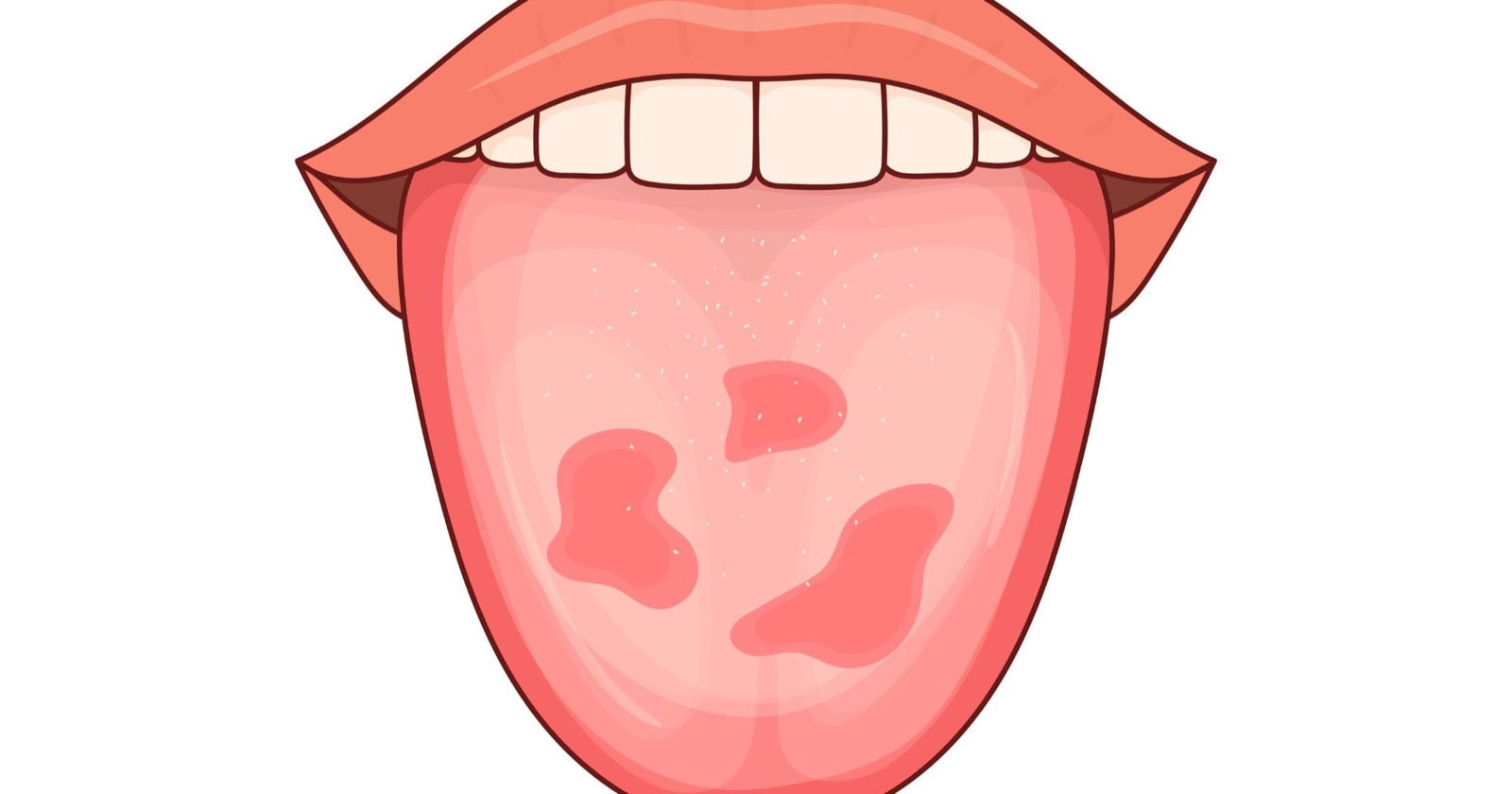
Geographic tongue, also called benign migratory glossitis, is a condition where irregular, inflamed patches appear on the surface of the tongue, often with white borders (Better Health Channel, Victorian Department of Health, “Tongue”).
The tongue is normally covered in tiny bumps called papillae. In geographic tongue, these bumps are lost from some areas, leaving smooth, red patches. The patches give the tongue a map-like look, which is where the name comes from.
Geographic Tongue Symptoms
- Smooth red patches, often with a paler, slightly raised border.
- Patches that change in size and shape, and move to different parts of the tongue.
- No symptoms at all, for many patients.
- Sensitivity or a mild burning feeling, especially with hot, spicy, salty or acidic foods.
- A tongue that can sometimes look generally red or swollen.
The patches typically appear on the top and sides of the tongue. They can come and go over days, weeks or longer.
What Causes Geographic Tongue?
The cause is not known. The Better Health Channel lists several risk factors thought to play a part (Better Health Channel, “Tongue”):
- Mineral or vitamin deficiencies.
- Local irritants, such as strong mouthwashes, cigarettes and alcohol.
- Certain forms of anaemia.
- Infection.
- Some prescribed products.
- Stress.
It may also run in families. Having one of these factors doesn’t mean you will get geographic tongue, and many patients have it with none of them.
Is Geographic Tongue Harmful?
Geographic tongue is generally regarded as harmless. It is not contagious, it is not an infection, and it doesn’t normally need treatment. For some patients, it is uncomfortable, particularly with certain foods.
Its look can be worrying, and it can flare up and settle repeatedly. That is why it is worth having it identified once, so you can stop wondering about it.
Geographic Tongue or Another Tongue Problem?
The hallmark of geographic tongue is that the patches move and change. Other conditions can look similar, and your dentist or doctor can tell them apart. They include:
- Oral thrush, a yeast overgrowth that can cause white patches.
- Leukoplakia, which causes white patches that cannot be wiped off.
- Oral lichen planus, which can cause white, lacy patterns.
These are possibilities for a professional to assess, and this article cannot tell you whether any applies to you. A patch that stays in one place, does not change, cannot be wiped off or feels lumpy needs to be checked.
How Geographic Tongue is Diagnosed
Tongue disorders are generally diagnosed by a physical examination and medical history (Better Health Channel, “Tongue”). Your dentist or doctor will usually:
- Look at your tongue and the rest of your mouth.
- Ask when the patches appeared, whether they move or change and whether you have any symptoms.
- Ask about your health, habits and any products you use in your mouth.
- Suggest further checks if something doesn’t fit the usual pattern.
Managing Geographic Tongue
There is no cure, and it usually doesn’t need treatment. If it is uncomfortable, these steps may help:
- Avoid very hot, spicy, salty and acidic foods and drinks when the tongue is sore.
- Avoid known irritants such as strong mouthwashes, tobacco and alcohol.
- Keep brushing your teeth and gently cleaning your tongue.
- Keep a short note of when patches appear and what seems to set them off.
If it is persistently sore, your dentist or doctor can talk through your options. These steps may ease discomfort, but they cannot be guaranteed to stop the patches from appearing.
When to See a Dentist or Doctor
See your dentist or doctor if:
- A patch stays in the same place and does not change.
- A white or red patch cannot be wiped off.
- You can feel a lump, thickening or rough area.
- A sore or ulcer has not healed after about two weeks.
- The tongue is very painful or bleeds.
- You have trouble swallowing or moving your tongue.
- You have numbness in your mouth.
- You feel unwell or have a fever.
If you have trouble breathing or swallowing, call 000 or go to your nearest hospital emergency department.
Geographic Tongue FAQs
Is geographic tongue contagious?
No. It can’t be passed from one person to another.
Does geographic tongue go away?
It usually comes and goes. The patches heal in one spot and can appear in another, and it can last for months or years in some patients. It is not predictable, and your dentist or doctor can talk through what to expect.
Can stress cause it?
Stress is listed among the factors thought to be involved (Better Health Channel, “Tongue”), and it may make a flare more likely in some patients. The cause is not fully understood.
Is geographic tongue the same as oral cancer?
No. Geographic tongue is a different condition. But other tongue patches can look similar, and some need checking, which is why any patch that doesn’t change, doesn’t heal or feels lumpy should be examined.
Book a Check-up in Bondi Beach
Noticed patches on your tongue, or a sore spot that isn’t going away? The next step is an examination.
At Bondi Dental, your dentist can look at your tongue and mouth, explain what they see and advise whether any further checks are needed. You can also read about our general dentistry.
Call us on (02) 9365 7187 or book online to arrange a check-up.
We are at 136 Curlewis St, Bondi Beach NSW 2026, and we see patients from Bondi Beach and the wider Eastern Suburbs.
Source: Better Health Channel, Department of Health (Victoria), “Tongue”, last reviewed 30 September 2014.
This article is general information and does not replace advice from a registered dental practitioner or doctor. Results vary between patients. Ask your dentist whether treatment is appropriate for you.