Cracked Tooth: Types, Symptoms and Treatment Options
Nothing ruins a meal or your day faster than a sudden, sharp pain in your tooth. A cracked tooth can sneak up silently or strike unexpectedly, leaving you unsure what to do next.
Understanding the types of cracks, recognising the symptoms, and knowing your treatment options can protect your smile and prevent further damage. Knowing when and how to act is essential.
Types of Tooth Cracks
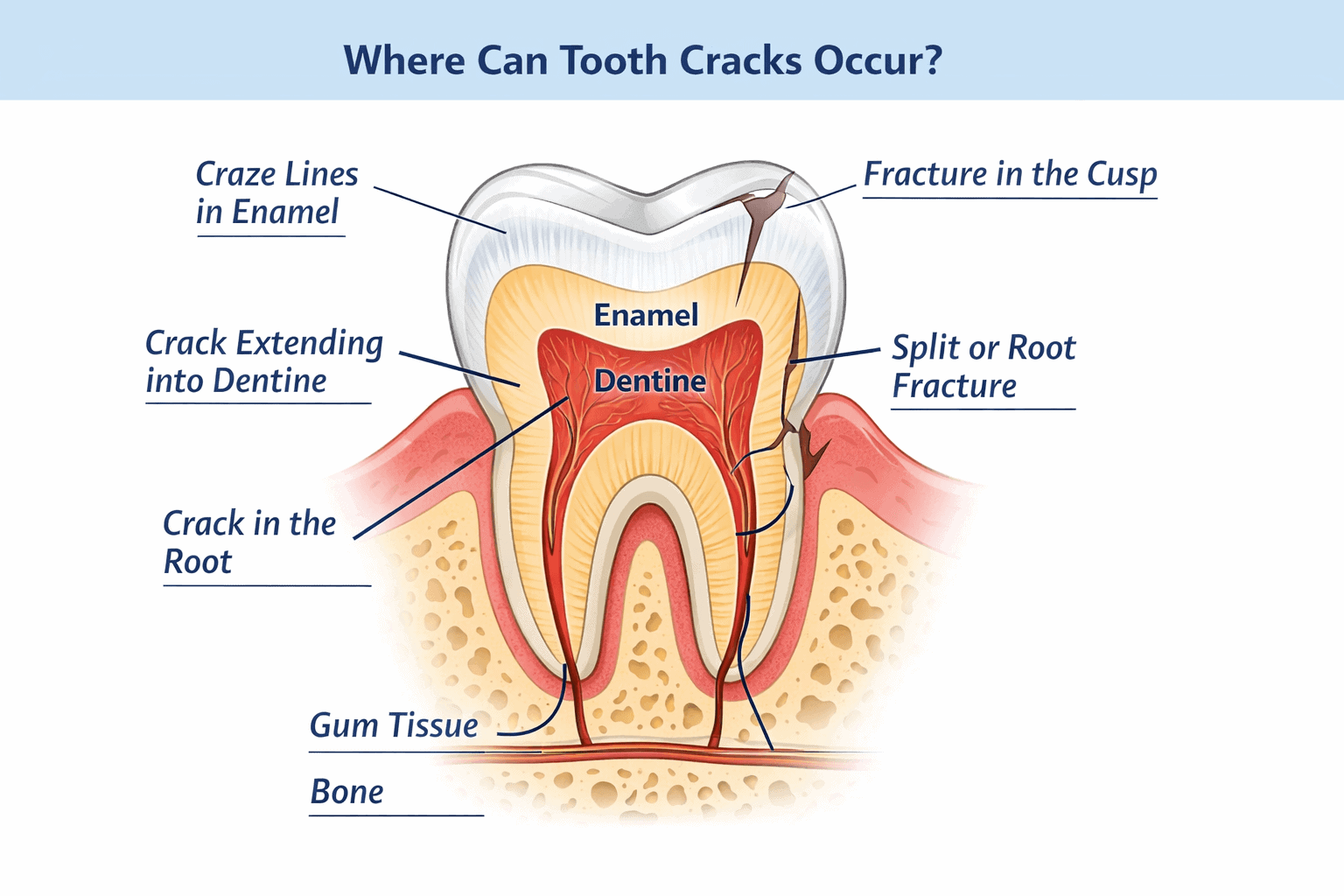
- Craze Lines: Fine, surface cracks in the enamel. Usually harmless and often noticed during routine check-ups.
- Fractured Cusp: Part of the tooth’s top surface may chip away, sometimes in areas that have been restored before.
- Cracked Tooth: A deeper crack that may extend toward the root. It can cause intermittent discomfort when chewing or biting.
- Split Tooth: A more severe fracture that separates the tooth into segments. Often causes ongoing pain.
- Vertical Root Fracture: Cracks that start within the root and extend upward. It can be difficult to detect without dental imaging.
Signs You May Have a Cracked Tooth
Cracks don’t always show themselves visually, so recognising symptoms is vital:
- Pain when biting or releasing pressure – Sudden, sharp pain may signal a crack that shifts slightly when pressure is applied.
- Sensitivity to hot, cold, or sweet foods – A crack can expose the inner dentine, triggering discomfort.
- Intermittent pain – Pain that appears and disappears frequently leads to a developing crack.
- Swelling or tenderness around the tooth – Indicates possible infection or gum irritation caused by the crack.
Even mild or occasional symptoms shouldn’t be ignored, as cracks can worsen and lead to more serious dental issues.
What Causes Teeth to Crack?
Several common factors make teeth vulnerable to cracks:
- Biting hard foods or objects – Chewing ice, hard nuts, or bones can stress teeth beyond their capacity.
- Grinding or clenching (bruxism) – Persistent pressure from night-time grinding weakens teeth over time.
- Large fillings – These can reduce a tooth’s natural strength, increasing the risk of fracture.
- Trauma or accidents – Falls, sports injuries, or direct impacts can cause immediate cracks.
- Temperature extremes – Rapid shifts from hot to cold foods or drinks expand and contract enamel, creating microcracks.
- Age – Teeth naturally become more brittle as we get older, increasing susceptibility to fractures.
Being aware of these risks can help you adjust your habits and proactively protect your teeth.
Treatment Options by Crack Type
Treatment of the teeth is based on the nature and the extent of the crack. Here’s what you can expect:
Craze Lines
Most craze lines don’t require any treatment. Your dentist will usually monitor them during regular dental check-ups to ensure they don’t deepen or cause sensitivity.
Fractured Cusp
This type of crack can often be repaired with dental bonding or a crown. Bonding restores the missing portion, while a crown covers the weakened area to prevent further damage.
Cracked Tooth
Teeth with deeper cracks may need root canal therapy to remove affected nerve tissue, followed by a crown to stabilise and protect the tooth. This approach helps reduce discomfort and preserve tooth function.
Split Tooth
A split tooth usually involves irreversible damage. Depending on severity, extraction may be necessary, followed by replacement options such as bridges or dental implants to restore the bite.
Vertical Root Fracture
Cracks that start in the root are often challenging to repair. In many cases, extraction is required if the tooth cannot be saved, and a replacement tooth may be considered to maintain oral health.
What to Do If You Think You’ve Cracked a Tooth
Quick intervention will minimise pain and harm.
- Rinse with warm water – Cleans the area and helps prevent infection.
- Use a cold compress – Reduces swelling and eases pain.
- Take over-the-counter pain relief – Provides temporary comfort while awaiting treatment.
- Do not chew on the affected tooth – Only eat soft foods until you have been examined.
- See your dentist promptly – Early evaluation increases the chance of saving the tooth.
Bondi Dental offers careful, tailored treatment to protect your smile and restore comfort.
FAQ
Can a cracked tooth repair naturally?
No. Teeth cannot repair cracks naturally. Professional care is required to prevent worsening damage and potential tooth loss.
How urgent is a cracked tooth?
Evaluation should be prompt. Early treatment can prevent infection, nerve damage, and further fractures.
Will I lose the tooth if it’s cracked?
Not always. Many cracked teeth can be restored with bonding, crowns, or root canal therapy. Severe splits or vertical root fractures may require extraction.
Can you crack a tooth without noticing it?
Yes. Minor cracks or craze lines can be painless and go unnoticed. Regular dental check-ups help detect these early.
Cracked Tooth Treatment in Bondi Beach
A cracked tooth doesn’t have to mean a lost tooth. Bondi Dental provides patient-friendly treatment options designed to restore your smile, its functionality, and your confidence.
Whether you live in Bondi Beach, Bondi Junction, Bronte, Tamarama, or North Bondi, our team can assess your tooth and recommend the right solution, whether it’s bonding, a crown, root canal therapy, or, if necessary, extraction.
Call us today at (02) 9365 7187 or book online to arrange your appointment. Visit us at 136 Curlewis St, Bondi Beach, and take the first step toward protecting your teeth and maintaining a brighter smile.